| Rating: | 5 (1 votes) |
| Played: | 0 times |
| Classification: | Skill Games |
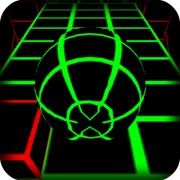
There are levels that at first glance seem like just rolling a marble from point A to point B. Marble Maze deliberately breaks that notion with paths full of traps, fake holes, rotating blades, and constantly changing walls. The objective remains clear: avoid red, find blue, and get the marble to the finish line. The problem is that the safe path is rarely immediately visible.
Marble Maze has you guiding a shiny marble through many worlds of varying topography and hazards. One mistake in a tight area, like going too rapidly into a corner, or mistaking a hole for a passage, can immediately end the whole level.
Notably, the game doesn't make movement a complicated sequence of actions. On PC, you use WASD or Arrow Keys to roll the marble. Hold Shift to accelerate, while R allows for quick replay. Enter or Space confirm, and Esc/P pause.
The obstacles in the game are designed to make players observe before accelerating. Decoy holes can make you think you're going in the right direction, while rotating blades create gaps that only appear for a short time. Moving walls change the movement space, forcing you to adjust direction mid-journey.
Speed is also a double-edged sword. Boost lets the marble go quicker over extended lengths, but using it in tight spots can easily turn a typical turn into a straight plunge into a trap.
The fastest route is not necessarily the best one to get a good score. You can pick up coins on the way, chain up power-ups, and keep a streak going to make a hot streak.
If the reward chain is long enough, the Gold Rush becomes a more tempting goal than merely finishing the level. This is when the pacing matters, when to take a chance for the rewards and when to skip to save turns.
Marble Maze also has a skin and star system, so you have extra incentive to retry levels you’ve already conquered. One playback may be focused on finding the green route. The next playthrough may be about earning more money, keeping combos going, or finishing the level with less errors.
The game is appealing because the distance between "reaching the finish line" and "almost getting there" is so narrow. As the speed increases, every steering adjustment becomes crucial. And that's why a level that seems to only take a few dozen seconds can easily turn into another replay.
Skill Games